How Tesla Robotaxi Works: A 2026 Guide
Tesla Robotaxi carries paying passengers with nobody in the driver's seat in six US metros: Austin, Dallas, Houston, Miami, Orlando and Tampa. Fares run about $3.00–3.25 to start plus $1.00–1.40 per mile, the two-seat Cybercab entered public service in Austin in September 2026, and California still requires a safety monitor aboard.
Key takeaways
- Six metros have fully driverless public service: Austin, Dallas and Houston in Texas; Miami, Orlando and Tampa in Florida.
- Fares are metro-specific and dynamic. Austin has run about $3.25 base plus $1.00 per mile; Dallas about $3.00 base plus $1.40 per mile.
- The Cybercab — two seats, no steering wheel, no pedals — began carrying paying passengers in Austin in September 2026.
- Tesla runs a camera-only vision stack on Hardware 4. No lidar, no radar. That is the core architectural bet.
- Waymo is still much larger: roughly 4,000 vehicles, 14 metros and 500,000+ paid rides a week against Tesla's far smaller fleet.
- California has no driverless Tesla service. Bay Area vehicles carry a trained safety monitor because of state permitting.
- Figures verified September 2026. Autonomy rollouts move fast — check the date before you quote any of this.
Where Tesla Robotaxi actually operates
The short answer, and the one most articles get wrong by a city or two: Austin, Dallas, Houston, Miami, Orlando and Tampa. Those are the metros where you can summon a Tesla and ride with nobody in the front seat.
The sequence matters, because it tells you how Tesla is choosing markets. Service opened in Austin in June 2025 with human safety monitors riding along in modified Model Y vehicles. Those monitors started coming out of the cars in January 2026. Dallas and Houston followed in April 2026. Then in July 2026 the service cleared Texas entirely and launched driverless in three Florida metros at once.
Every one of those is a permissive-regulation state with no pre-approval requirement for autonomous passenger service. That is not a coincidence, and it is the single best predictor of where the service goes next.
A seventh market deserves an asterisk. Tesla operates in the San Francisco Bay Area, but California's rules keep a trained employee in the vehicle. Riders there are not getting the driverless product.
We keep a live status table by metro on our Robotaxi overview page, including which markets have a monitor aboard.
What a Tesla Robotaxi ride costs
Pricing is set per metro and moves with demand, so any single number you see quoted is a snapshot rather than a rate card.
- Austin: roughly $3.25 base fare + $1.00 per mile.
- Dallas: roughly $3.00 base fare + $1.40 per mile.
Both sit below typical Uber and Lyft pricing for the same trip, which is the entire strategic point — there is no driver taking a cut. Tesla has publicly targeted an operating cost below $0.30 per mile for the Cybercab, which is the number that would make the economics genuinely disruptive rather than merely competitive.
The app quotes your actual fare before you confirm, and the 26.4 release added explicit dynamic pricing along with a minimum ride distance. Expect surge behaviour at peak hours, exactly as you would on any ride-hail platform.
How to ride: the app, step by step
The Robotaxi app launched on iOS in 2025 and finally reached Android in April 2026, nearly a year later. It signs in with your existing Tesla Account — no separate credential.
- Set your destination. Both pickup and drop-off have to sit inside the mapped service area for that metro. The boundary is visible in-app and it is smaller than the city limits.
- Review the quote. Fare and estimated wait appear before you commit.
- Match the licence plate. Once a car is assigned, the app shows its plate. Check it before opening a door — this is the whole safety protocol for boarding, and it exists because there is no driver to confirm your name.
- Get in and tap Start Ride. Doors, belt, tap. The car will not move until you do.
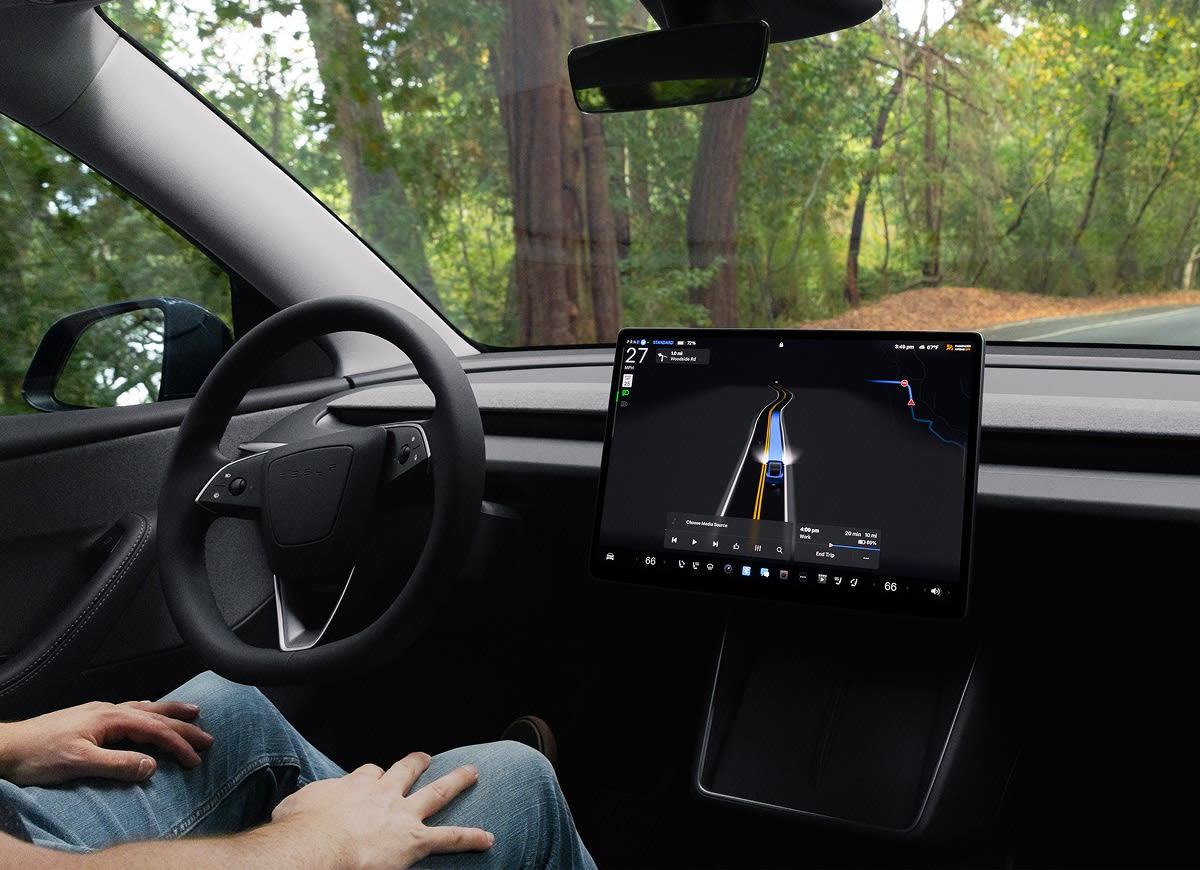
- Control the trip from your phone. Climate, seat position and audio are all app-side. You can change the drop-off mid-route or ask the vehicle to pull over.
On accessibility: the app is screen-reader compatible and ships in 29 languages, and the vehicles accommodate service animals plus folding wheelchairs and similar assistive devices in the trunk.
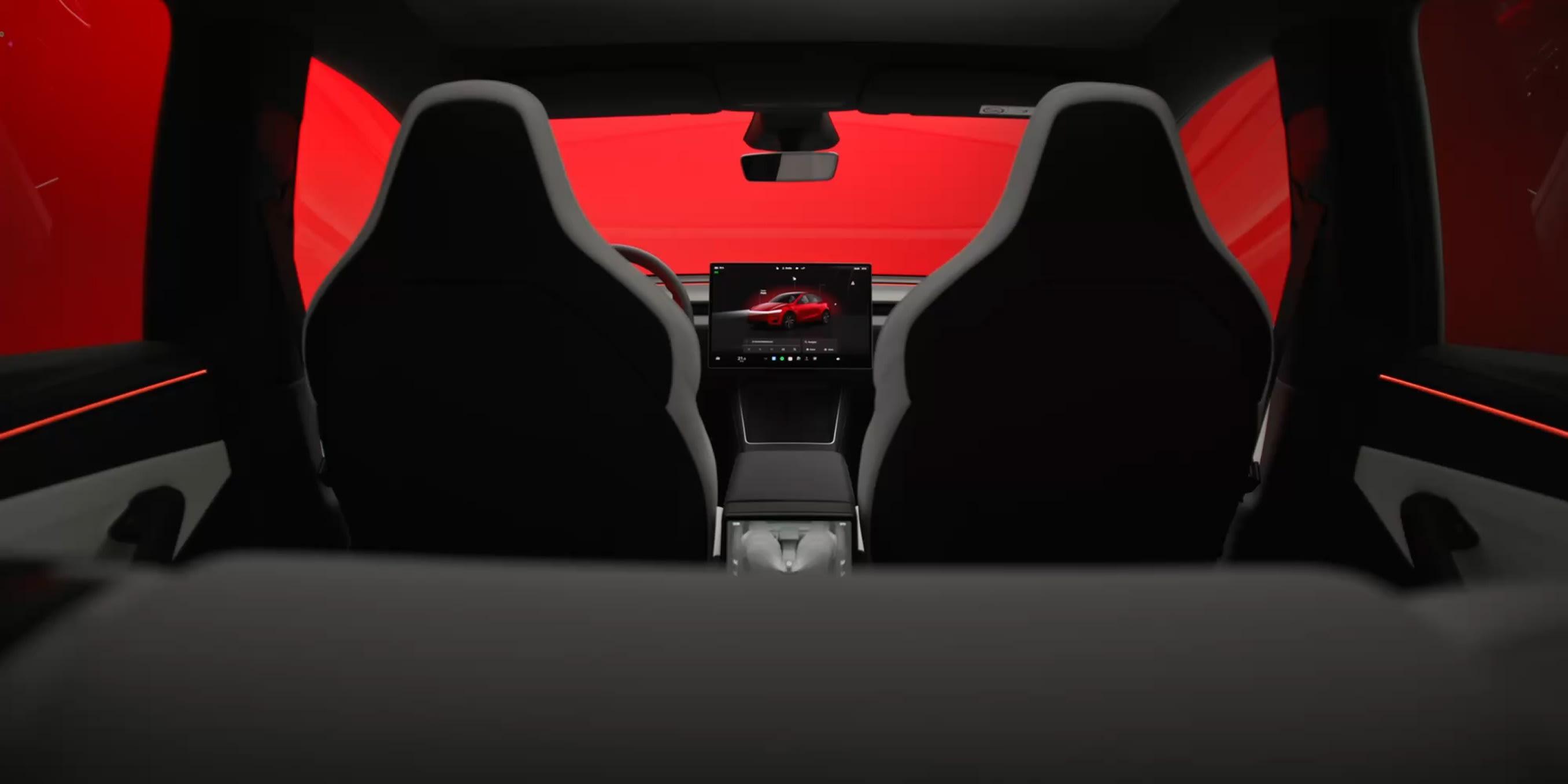
Cybercab: the first vehicle built with no driver in mind
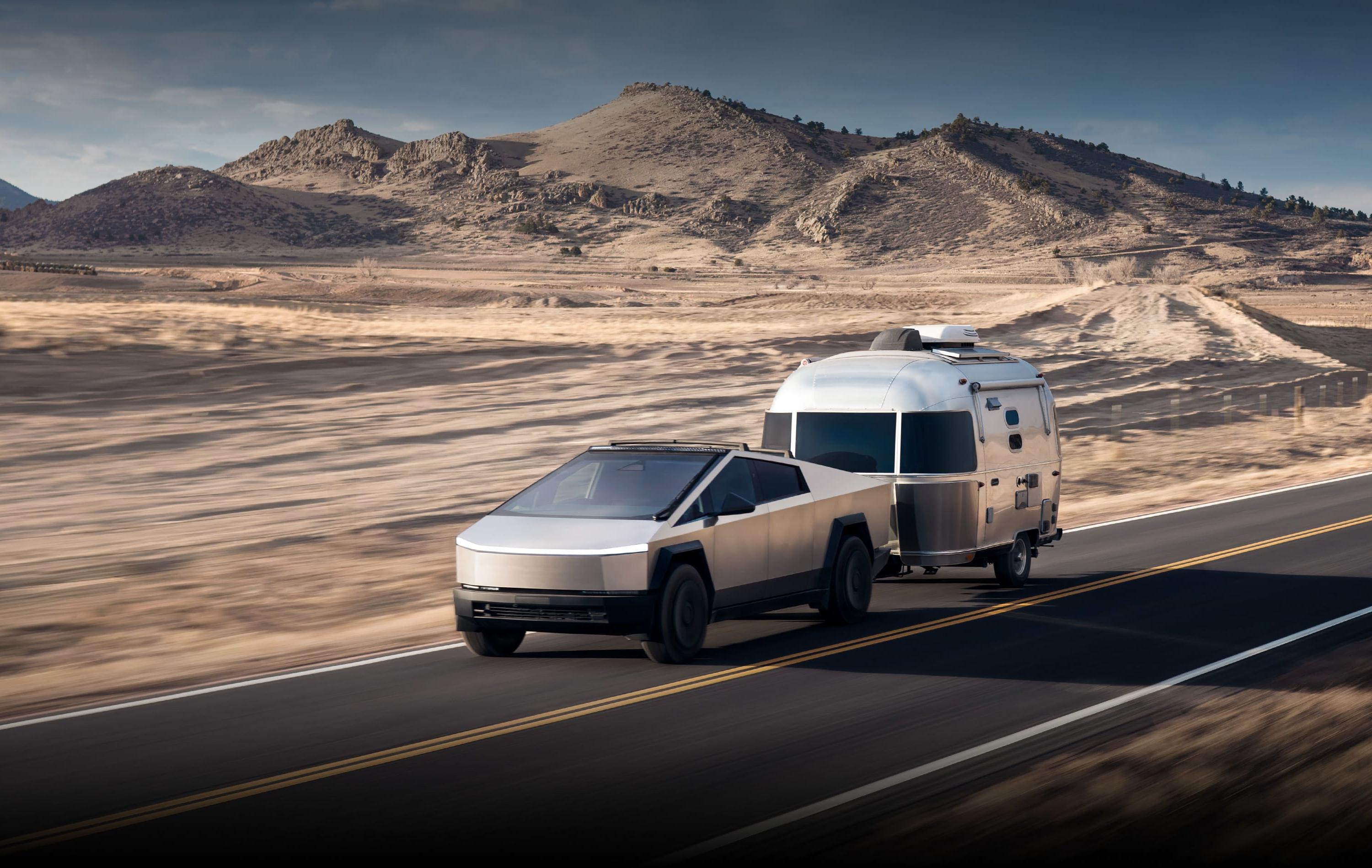
The Cybercab is the part of this story that is genuinely new. Everything before it was a Model Y with the driver removed. The Cybercab is a vehicle designed from a blank sheet on the assumption that a driver will never exist.
- Two seats. Not four, not five. Tesla's ridership data evidently says most trips do not need more.
- No steering wheel, no pedals, no side mirrors, no rear window. There is no manual mode to fall back to.
- Butterfly doors that open automatically — there are no exterior handles.
- Single-motor RWD, 200 miles EPA-rated. Modest by retail Tesla standards, and entirely sufficient for urban duty cycles with depot charging.
- Hardware 4 compute, camera-only. The same platform generation as current retail vehicles.
- Target cost below $30,000, with a stated ambition of two million units a year.
It was unveiled in October 2024. First production unit rolled off the line at Gigafactory Texas on 17 February 2026, and the first paying public rides happened in Austin in September 2026 — the month this guide was written.
A third vehicle, the Robovan, has been shown as high-occupancy microtransit with an accessibility-first brief. It is announced, not operating.
Camera-only versus lidar: why the argument matters
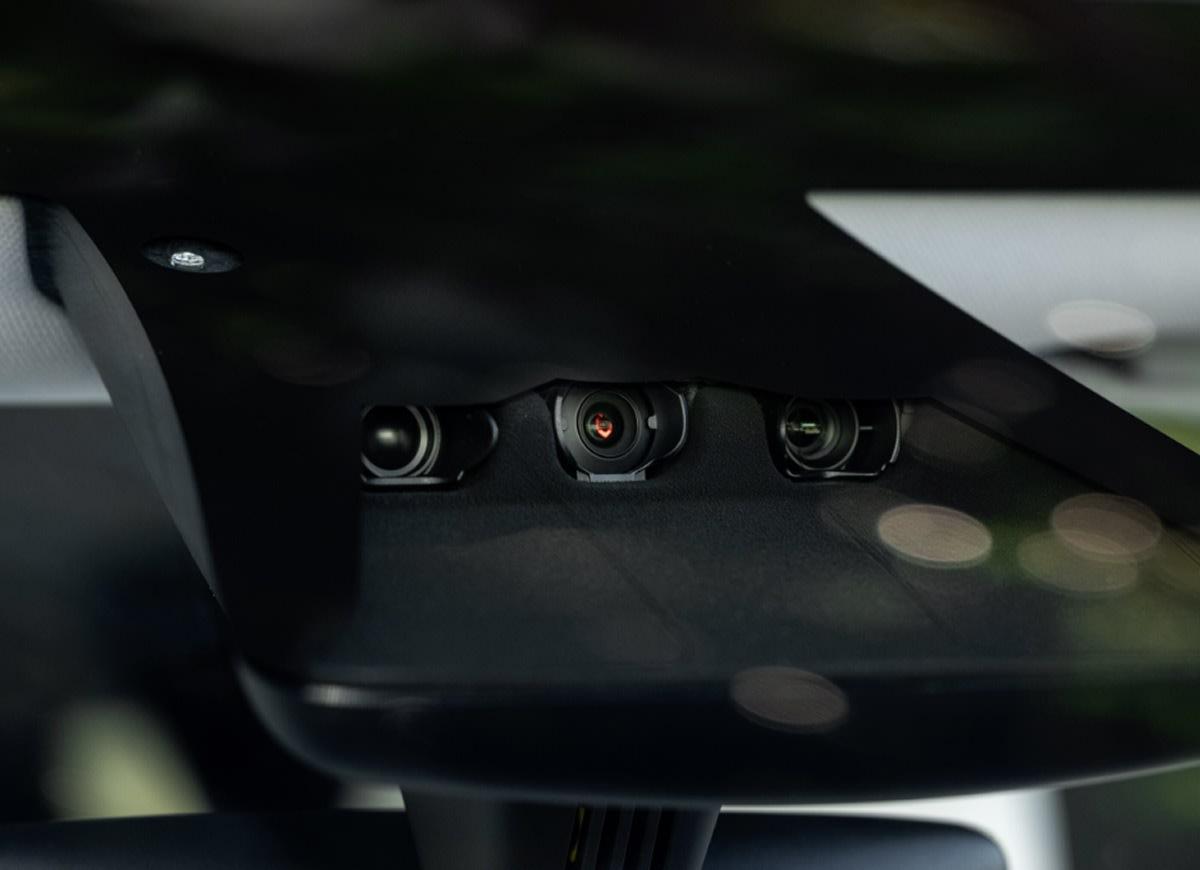
Tesla is the only major operator running autonomy on cameras alone. Waymo and Zoox both fuse camera, lidar and radar. This is not a detail — it determines the cost structure of the entire business.
Lidar is expensive and, historically, the dominant line item in an autonomous vehicle's bill of materials. Removing it is what lets Tesla talk about a sub-$30,000 vehicle and a sub-$0.30 per-mile operating cost. A sensor-fused competitor cannot approach those numbers with current hardware pricing.
The counter-argument is redundancy. Lidar measures distance directly and does not care about lighting; cameras infer depth and degrade in fog, glare and heavy precipitation. Tesla's position is that a sufficiently good vision model makes the extra sensors redundant, and that fleet scale produces better training data than any competitor can gather.
Whichever way that resolves, the commercial asymmetry is real: Tesla's approach scales cheaply if it works, and Waymo's works today at a cost that is harder to drive down.
Tesla versus Waymo: the honest scoreboard
Tesla gets more coverage. Waymo has more cars on more roads, and it is not close.
- Waymo: roughly 4,000 vehicles, 14 US metros, and more than 500,000 paid rides per week. Denver, San Diego and Tampa opened to public riders on 1 September 2026.
- Tesla: around 25 unsupervised vehicles across three Texas cities as of late April 2026 — 19 in Austin, 3 in Dallas, 3 in Houston.
The trajectory is the interesting number, though. By 27 August 2026, Tesla's registered autonomous fleet in Texas had reached roughly 37% of the size of Waymo's entire Texas fleet. Growing from 25 vehicles to a third of the incumbent's state presence inside four months is a steep curve.
The fair summary: Waymo leads decisively on every current operational metric. Tesla's argument has never been about today's fleet size — it is that a purpose-built $30,000 vehicle with no lidar scales in a way a sensor-fused fleet cannot.
Why California has no driverless Tesla service
California builds the cars and regulates them harder than anywhere Tesla operates driverless.
Authority is split. The DMV governs autonomous vehicle testing and deployment permits; the CPUC governs charging passengers for rides. A commercial driverless service needs clearance from both, in sequence, with documented safety evidence at each stage. Texas and Florida impose no equivalent pre-approval regime — which is precisely why Austin had driverless rides more than a year before California had a serious permitting conversation.
For anyone in the Central Valley or the Bay Area, the practical position as of this writing: you can ride a Tesla Robotaxi in the Bay Area, but a trained monitor sits up front. No service has been announced for Sacramento, Stockton, Modesto or the Lathrop corridor.
If the rollout pattern holds, California will not be early. It will be the market Tesla enters once the safety record from six permissive states is strong enough to carry a CPUC filing.
What this means if you own or are buying a Tesla
Two things follow from the rollout that actually matter to an owner rather than an investor.
Hardware generation now matters more than model year. The compute doing the driving in Austin is the same HW4 platform in current retail vehicles. Autonomy capability tracks hardware revision and software entitlement, not the year on the registration. When you shop used, the hardware revision is a specification worth confirming in writing — we publish it on every vehicle we list, alongside a diagnostic battery read rather than a dashboard estimate.
High-utilisation fleets change what wears out. A robotaxi accumulates miles several times faster than a private car, which pushes drive units, high-voltage packs and power electronics toward their service life sooner. That is the work the Lathrop facility does: drive units rebuilt to factory tolerance and dyno-validated, packs diagnosed at cell level and re-certified, chargers and inverters repaired at component level. An autonomous fleet does not reduce the need for remanufacturing — it multiplies it.
If you are weighing a purchase against what autonomy might be worth later, our true cost of ownership breakdown and financing estimates are the more useful place to start than any projection about robotaxi revenue.
FAQ: Tesla Robotaxi
Can I ride a Tesla Robotaxi in California? Only with a safety monitor aboard. Tesla operates in the San Francisco Bay Area, but California splits autonomous-vehicle authority between the DMV and the CPUC and has not authorised fully driverless public service. Texas and Florida have no comparable pre-approval regime, which is why they went first.
How much does a Tesla Robotaxi ride cost? It varies by metro and by demand. Austin has run about $3.25 base plus $1.00 per mile; Dallas about $3.00 base plus $1.40 per mile. The app quotes your actual fare before you confirm, and dynamic pricing means peak trips cost more.
Which cities have Tesla Robotaxi? Six metros have fully driverless service: Austin, Dallas and Houston in Texas, and Miami, Orlando and Tampa in Florida. The San Francisco Bay Area has vehicles operating with safety monitors aboard.
Does the Cybercab have a steering wheel? No. It has no steering wheel, pedals, side mirrors or rear window, and it seats two. It cannot be driven manually, which is why it is not sold the way a Model 3 or Model Y is.
Does Tesla Robotaxi use lidar? No. Tesla runs camera-only vision on Hardware 4 compute. Waymo and Zoox pair cameras with lidar and radar. Removing lidar is what makes Tesla's sub-$30,000 vehicle cost and sub-$0.30 per-mile operating target possible.
Is Tesla or Waymo bigger? Waymo, substantially — roughly 4,000 vehicles across 14 metros and over 500,000 paid rides per week. Tesla's fleet is far smaller but grew to about 37% of Waymo's Texas fleet by late August 2026.
Can I buy a Cybercab? Tesla has indicated retail availability below $30,000, but the vehicle entered service as fleet equipment first. There is no conventional order-and-collect path comparable to the existing lineup at the time of writing.
When is Robotaxi coming to Sacramento or Stockton? Nothing has been announced for the Central Valley. Given California's permitting requirements, expect the Bay Area to convert to driverless before any inland market opens.
The bottom line
Robotaxi stopped being a promise in 2026. Six metros, real fares, a purpose-built vehicle carrying paying passengers, and a fleet that quadrupled its relative position in Texas inside a single summer. That is a product, not a demo.
It is also still small, still confined to states that do not require permission first, and still behind a competitor with sixteen times the vehicles. Both of those things are true at once, and any coverage telling you only one of them is selling something.
We are not a robotaxi operator. We remanufacture the drive units, packs and power electronics that keep these cars running, and we sell battery-verified used Teslas with the hardware revision documented on the listing. If autonomy is part of why you are buying, see what is on the lot — or read the current status by city before you plan a trip around it.