Tesla Model X Buyer's Guide: Space, Doors and Plaid Power
The Tesla Model X is the SUV that refuses to behave like one — up to seven seats, around 90 cubic feet of cargo, 5,000 pounds of towing, and Plaid acceleration that humbles sports cars. Falcon-wing doors included. Here is everything a buyer needs to know.
Key takeaways
- The Model X is Tesla's flagship SUV: seating for up to seven, around 90 cubic feet of maximum cargo, and 5,000 lb towing capacity.
- Even the Long Range version hits 0–60 in about 3.8 seconds; the 1,020-hp Plaid does it in roughly 2.5 — physics-defying for a three-row SUV.
- EPA-rated range reaches roughly 335–348 miles depending on year and configuration.
- The falcon-wing doors are more than theater: they open in tight spaces and turn child-seat loading into a stand-up job.
- Used Model X pricing has fallen into family-SUV territory — making verified battery health and a real inspection the whole game. That is our specialty.
What makes the Tesla Model X different from every other SUV?
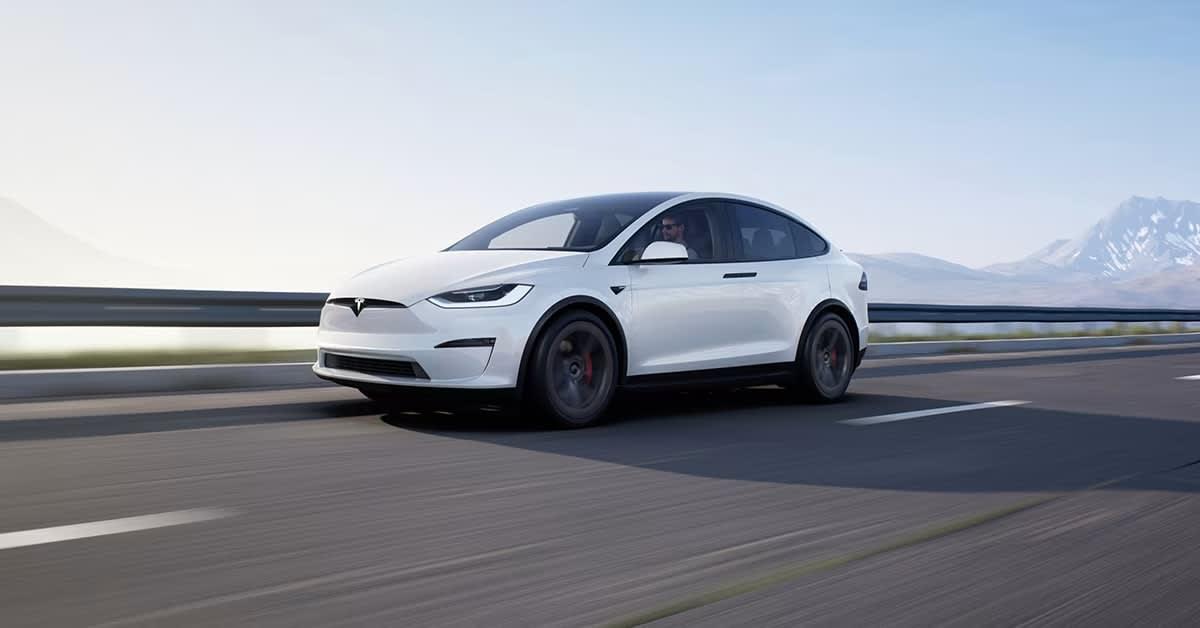
The Model X is what happens when an SUV is designed around electric architecture instead of adapted to it: a flat floor for three genuine rows, a windshield that stretches into the roofline, doors that rise instead of swing, and a drivetrain that out-accelerates most sports cars while carrying seven people and a dog.
No other three-row SUV — electric or otherwise — combines this much theater with this much genuine capability. That combination is exactly why used examples are so sought after now that pricing has descended from its early stratosphere.
See what is currently available in our verified Model X inventory.
Performance: a 5,300-pound magic trick
- Model X Long Range (Dual Motor AWD): roughly 670 hp and 0–60 in about 3.8 seconds — quicker than most hot hatches, in a three-row family SUV.
- Model X Plaid (Tri Motor AWD): approximately 1,020 hp, 0–60 in about 2.5 seconds, and torque-vectoring stability that makes the pace usable, not just quotable.
Adaptive air suspension is standard and earns its keep daily: it lowers at highway speed for efficiency, raises for rough roads, and kneels for easy entry. Despite the mass, the low-slung battery keeps body roll closer to sedan than SUV.
For a three-row family vehicle the safety record is the number that should matter most: the Model X holds a five-star overall rating from NHTSA, and official EPA range figures by model year are searchable at fueleconomy.gov.
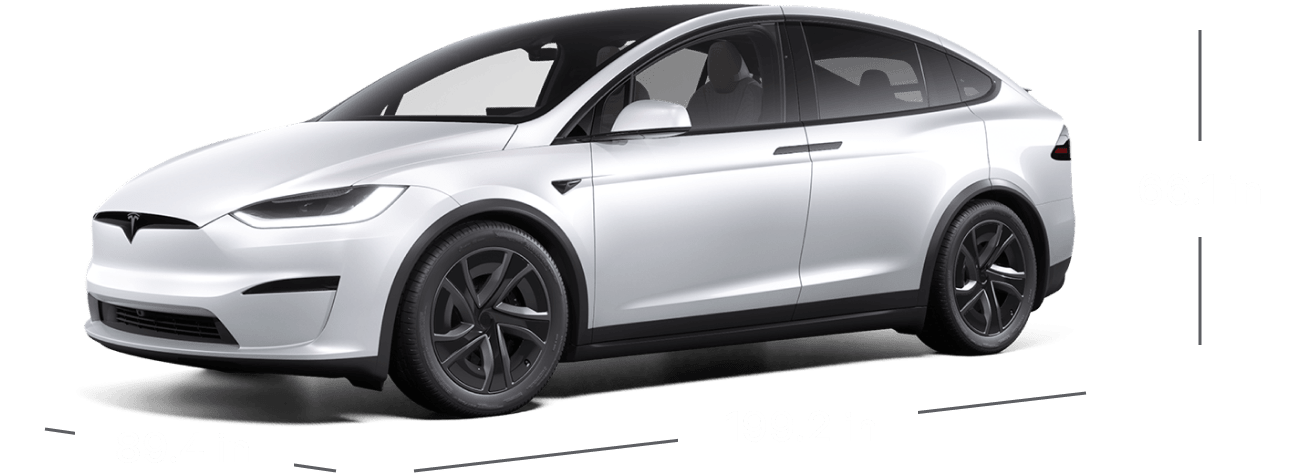
Model X specs at a glance
Approximate figures for recent model years:
- Range: roughly 335–348 miles EPA depending on configuration (EPA estimates when new; real-world varies).
- 0–60 mph: ~3.8s (Long Range); ~2.5s (Plaid).
- Seating: five, six (captain's chairs), or seven-seat layouts.
- Cargo: around 90 cu ft maximum with rows folded, plus a front trunk.
- Towing: up to 5,000 lb — the most capable tow vehicle in the lineup short of Cybertruck.
- Charging: up to 250 kW DC fast charging; full overnight charging at home.
- Doors: powered front doors and double-hinged falcon-wing rear doors with obstacle sensing.
The falcon-wing doors: gimmick or genius?
Both, and unapologetically. The double-hinged rear doors rise within about a foot of side clearance, sensing obstacles as they go — which means they open fully in parking spots where a conventional SUV door barely cracks. Parents discover the real killer feature: you load a child into a car seat standing upright, under a roof panel, out of the rain.
They are also the reason a proper inspection matters on a used X. The mechanisms are complex, and a healthy set operates smoothly, evenly, and without protest. Every Model X we list has its doors cycle-tested as part of the facility inspection — one more reason buying from an operation beats buying from a listing.
Inside: the SUV as first-class cabin
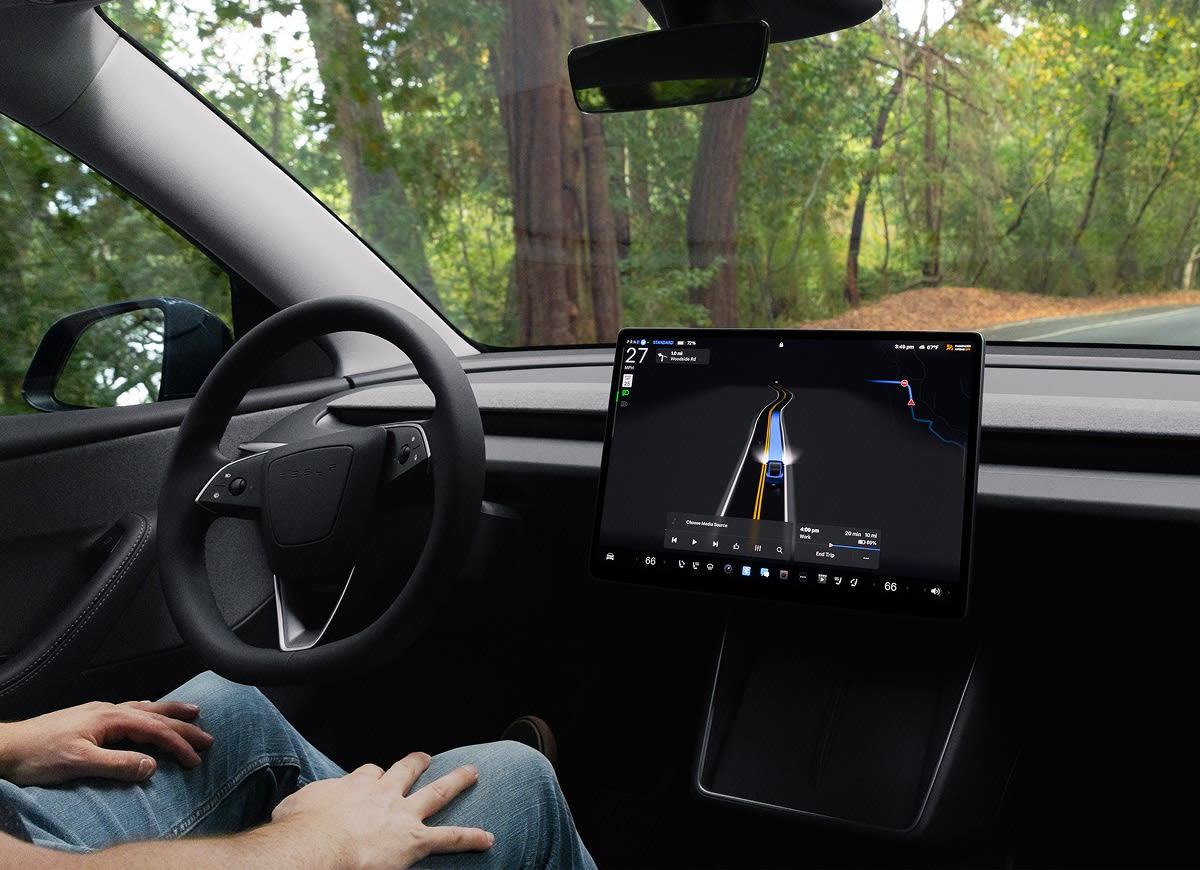
The panoramic windshield is the party trick nobody forgets — glass sweeping from hood to above your head, turning every drive into the IMAX cut. Below it, the 17-inch display runs navigation, entertainment, and the household logistics of a three-row family.
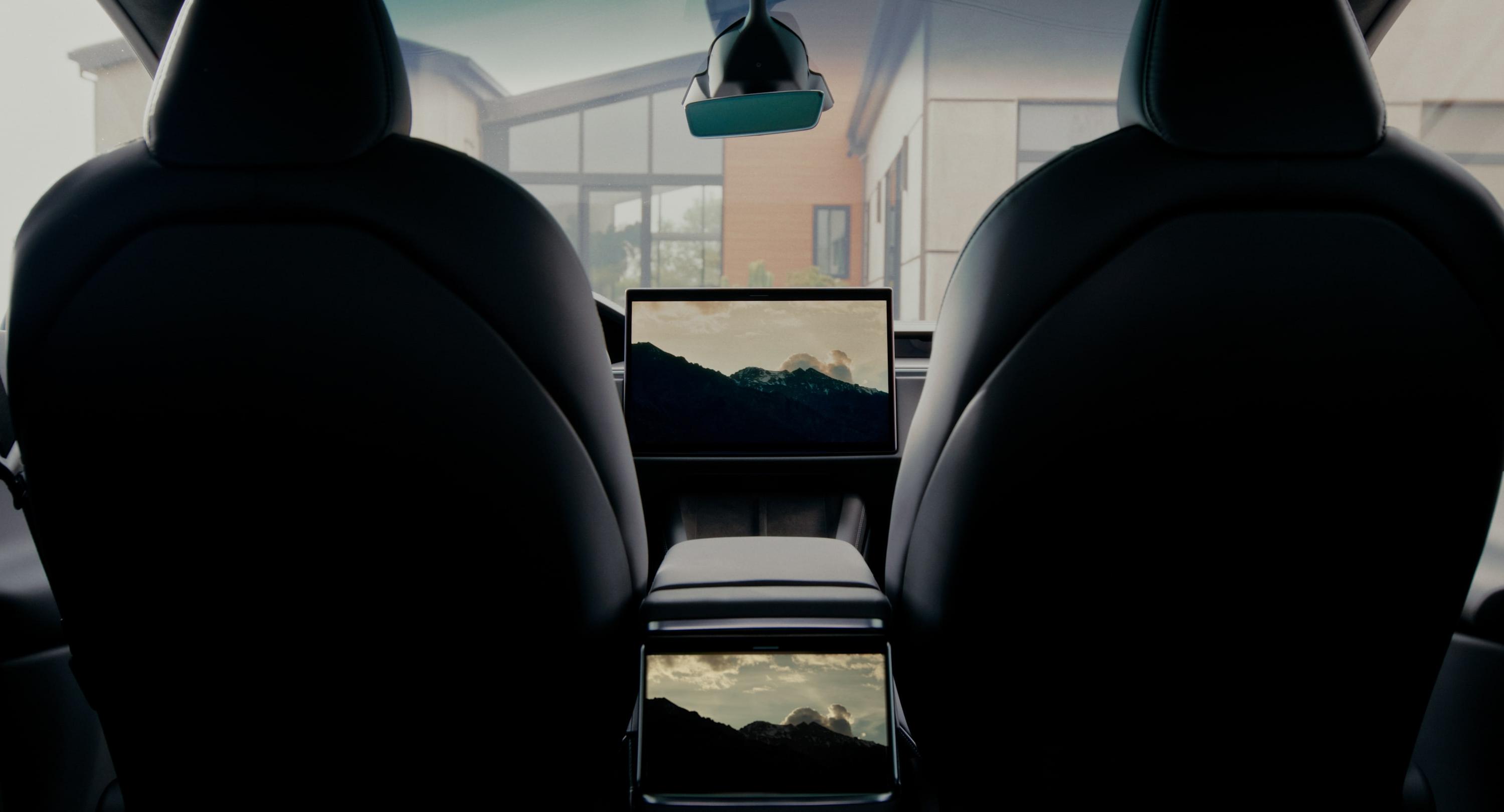
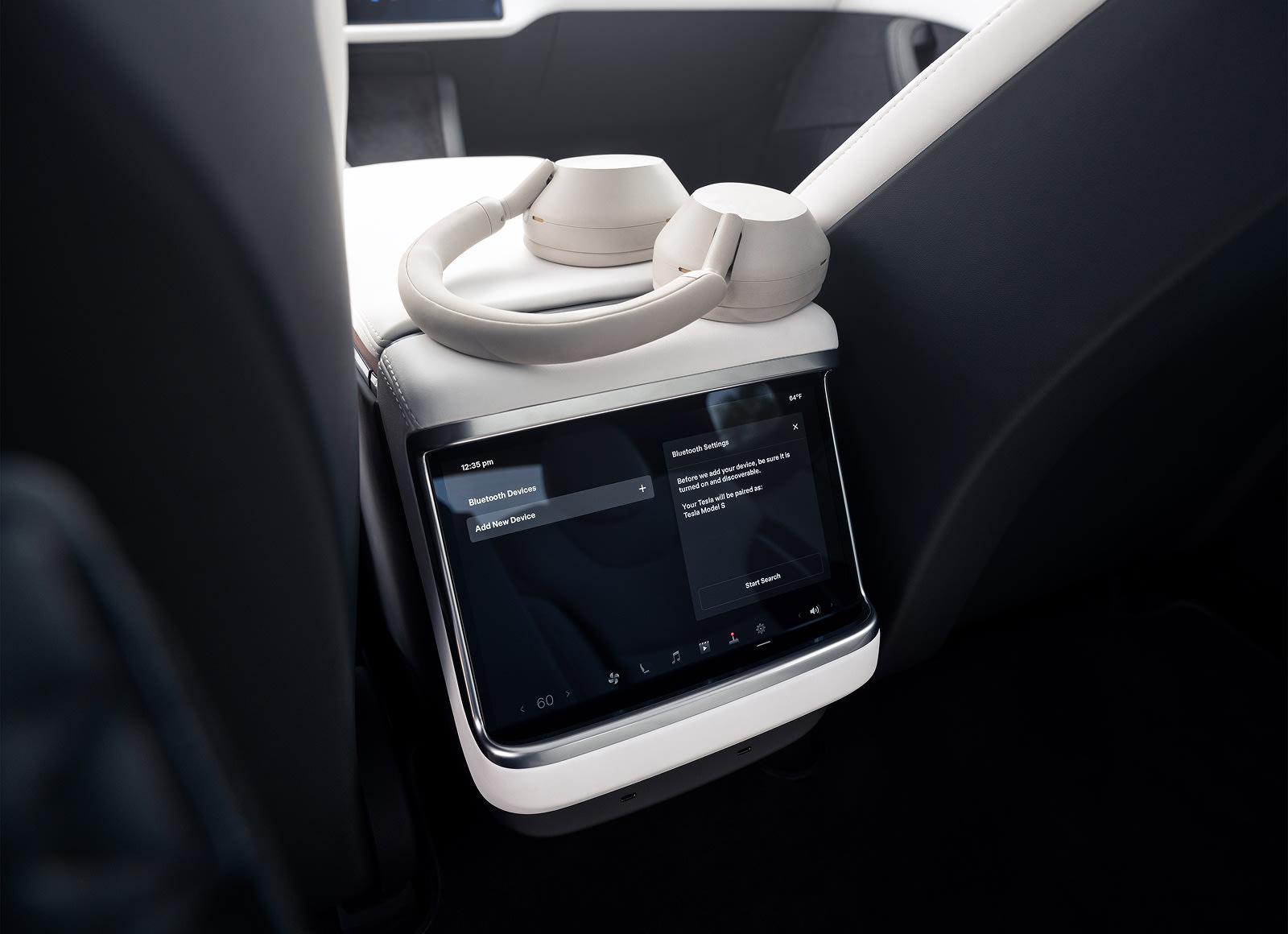
Second-row captain's chairs (in six-seat form) give passengers business-class isolation, and the rear touchscreen keeps them fed with entertainment and their own climate zone. A 22-speaker audio system and tri-zone climate finish the brief.
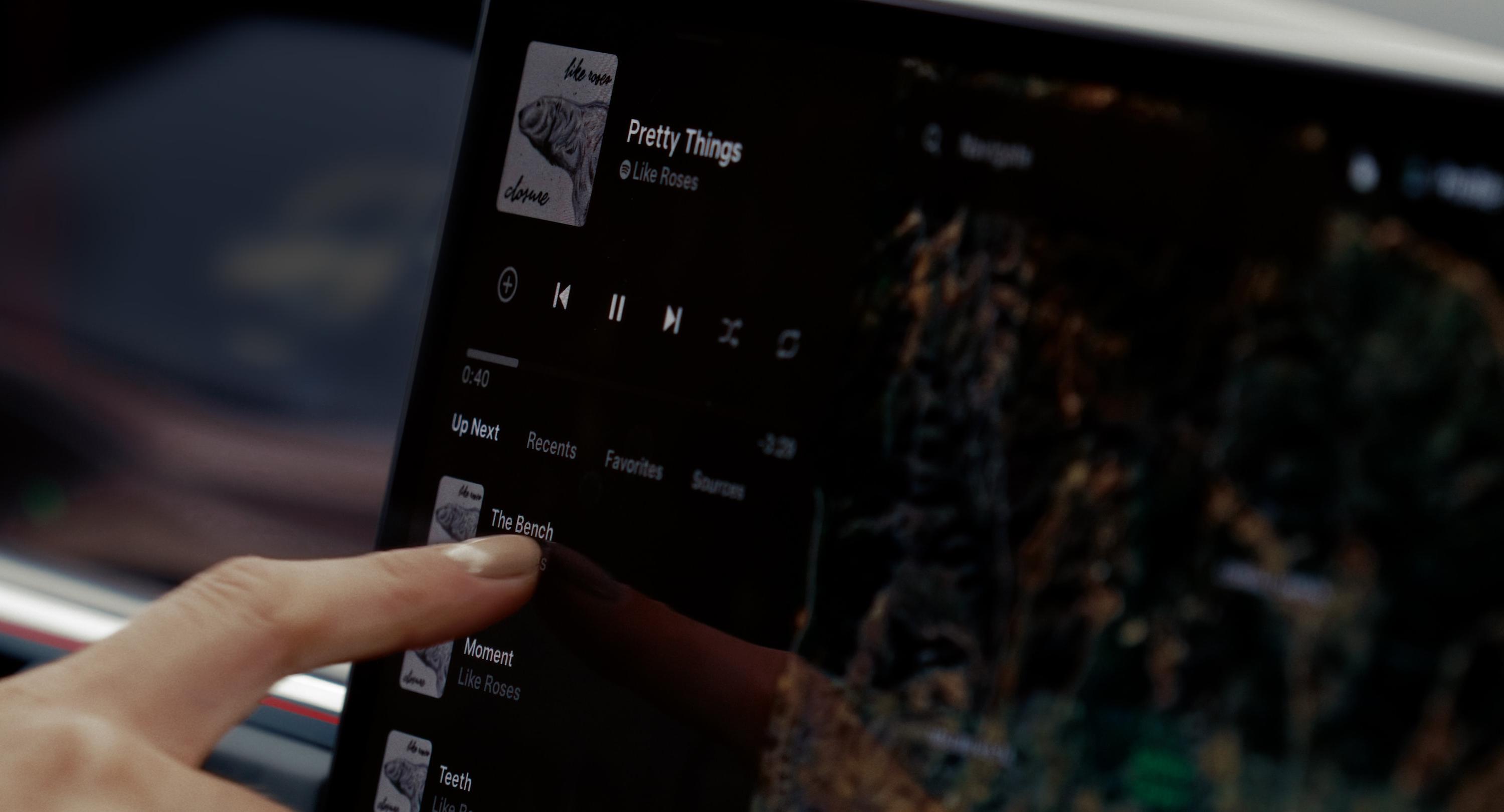
In-cabin streaming and gaming turn charging stops into intermissions rather than waits — a detail that matters more with kids aboard than any spec sheet admits.
Range, towing and the practical stuff
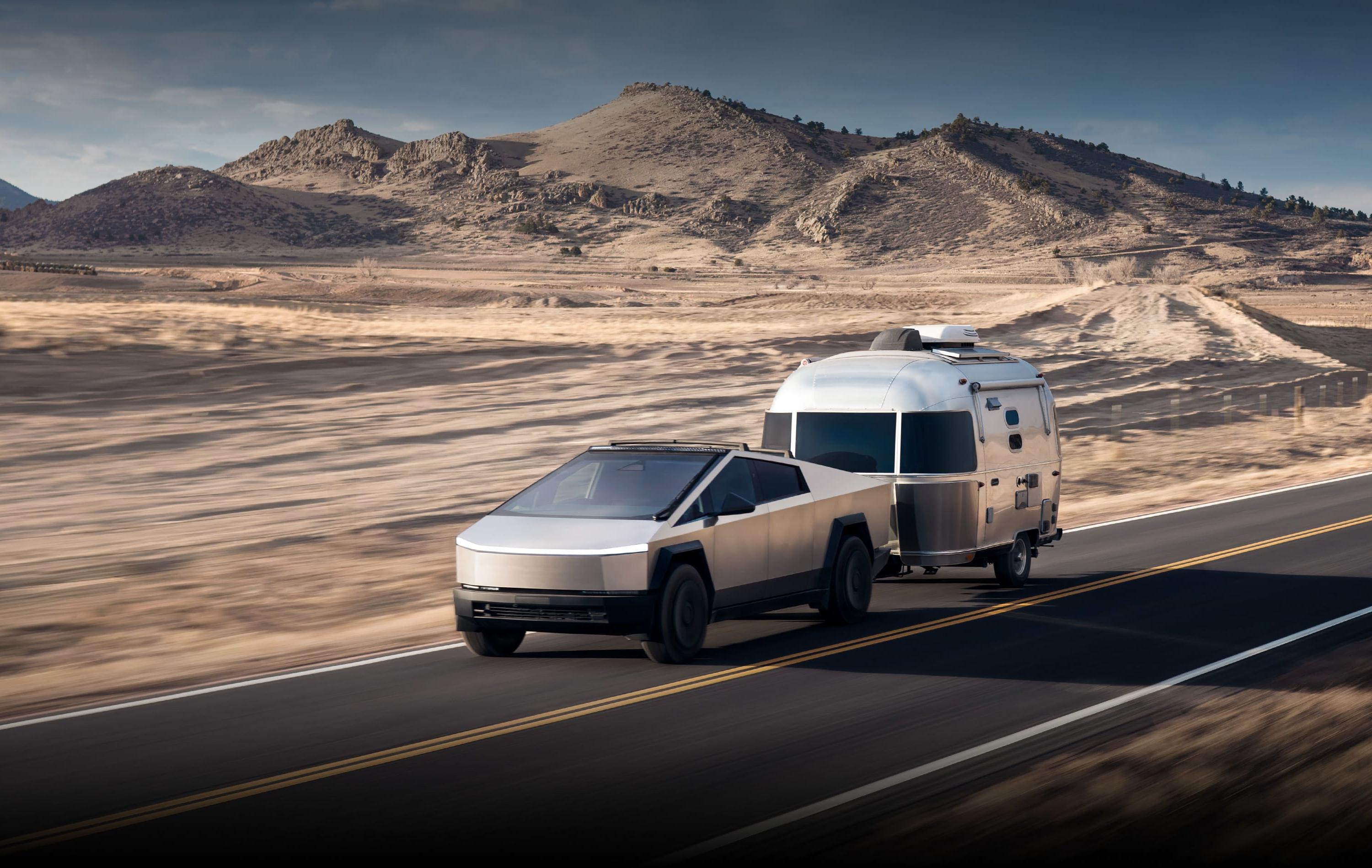
Roughly 335–348 EPA-rated miles (when new) makes the X a legitimate long-hauler, and 250 kW Supercharging keeps road trips moving. Towing up to 5,000 pounds covers boats, campers, and trailers — expect range to drop meaningfully while towing, as with every EV, and plan charging stops accordingly.
Around 90 cubic feet of maximum cargo swallows the family-vacation load-out with rows folded, and the flat floor makes loading painless. For running costs, the X follows the family pattern — pennies per mile at home rates, minimal maintenance — detailed in our cost of ownership guide.
Home charging setup is identical to every Tesla: Wall Connector, overnight, done. The full guide is here.
Model X or Model Y: do you need the flagship?
The honest cross-shop is not another luxury SUV — it is Tesla's own Model Y at roughly half the used price. The Y covers the crossover brief: space for a family of four, 76 cubic feet of cargo, the same software and charging network.
The X justifies its premium on four counts: a genuinely usable third row the Y cannot offer, 5,000 pounds of towing against the Y's 3,500, the air-suspension ride, and a cabin that treats six passengers as first-class rather than cargo. If none of those four move you, buy the Y and bank the difference.
If two or more do — larger families, boat owners, road-trip households — the X is the rare flagship that earns its price in daily utility rather than badge. The used market makes that case at its most persuasive.
The daily ownership experience
Running a Model X settles into the same rhythm as every Tesla — full each morning from the home charger, software improving overnight, service limited to tires and filters — just scaled to family size. Preconditioning earns its keep here: the cabin is warm and defrosted before the school run starts, on wall power rather than battery.
Budget honestly: insurance runs luxury-SUV money (quote first), 20–22-inch tires wear like the performance rubber they are, and the ownership math otherwise mirrors the lineup — cheap energy, minimal maintenance, depreciation already absorbed by the first owner on a used example.
The parts that fail on ordinary luxury SUVs — transmissions, turbos, exhaust systems — simply do not exist here, and the components that remain are the ones our remanufacturing operation knows from the inside.
Buying a used Model X: what to verify
The X asks for the most thorough pre-purchase inspection in the lineup — and rewards it with flagship capability at family-SUV money:
- Verified battery health — as ever, the defining number. Our guide to reading the report applies in full.
- Falcon-wing door operation — smooth, even, sensor-aware cycling on both sides.
- Air suspension — level stance, smooth height changes, no compressor drama.
- Warranty — 8 years/150,000 miles on battery and drive units; check the in-service date for time remaining.
Every one of these is covered in the documented inspection each Lathrop-listed Model X receives from the operation that remanufactures these exact components.
Road trips with a full house
The X's road-trip talent is logistical, not just electrical. Seven people's luggage fits without a roof box; the rear screen and wireless headphones absorb the back rows; tri-zone climate ends the temperature negotiations. Charging stops sequence themselves through the trip planner, and fifteen-minute Supercharger intervals align suspiciously well with family bathroom-and-snack cadence.
Preconditioning is the underrated flagship feature: the cabin reaches temperature on wall power before departure, and the battery pre-warms ahead of each charging stop so the truck-stop minutes count. Five hundred miles with a full house stops being an endurance event.
That combination — space, silence, sequenced charging — is why X owners report more road miles per year than almost any segment. The car removes the reasons to fly.
FAQ: Tesla Model X
Does the Model X really seat seven? Yes — a true seven-seat layout is available, with six-seat captain's-chair and five-seat configurations as alternatives. Third-row space is genuinely usable for kids and workable for adults on shorter trips.
How far does a Model X go on a charge? Roughly 335–348 EPA-rated miles when new depending on year and wheels; healthy used examples typically deliver high-200s real highway miles. Winter temporarily trims 20–30%, as with all EVs.
Can a Model X tow a camper? Up to 5,000 pounds — most single-axle campers, boats, and utility trailers are comfortably in range. Budget extra charging stops when towing.
Are the falcon-wing doors reliable? Mature examples with well-maintained doors operate smoothly for years. The honest answer is that they are complex and worth verifying — which is why door cycling is a standard part of our inspection, and any issues are resolved or disclosed before listing.
Is the Plaid worth it in an SUV? It is the quickest SUV you can reasonably buy, and the drama never gets old. But the Long Range does 95% of the job for meaningfully less money — our default recommendation for families.
The bottom line
The Model X remains the most capable, most theatrical SUV Tesla builds — seven seats, serious towing, Plaid-grade pace, and doors that make every school pickup an event. Bought used with a verified battery and a real inspection, it is the family flagship at a price that finally makes sense.
Browse available Model X vehicles — battery-verified, door-tested, facility-backed, and delivered nationwide. Bring the family; the doors will handle the entrance.
Ready to find your Tesla?
Every vehicle inspected, battery-verified and backed by the Lathrop facility.
Browse Inventory